Search
Results 2131 to 2140 of 2173
Giving Contours to Shadows
Inspired by Edouard Glissant’s concept of opacity, the research and exhibition project “Giving Contours to Shadows” presented works by more than 20 artists and artists’ groups from ten African countries, Italy, Portugal and French Guyana which...
The Unprotected. Les Zéros-Morts.
The French term “zéro-mort” means “no casualty”, but can also be interpreted as a “casualty with no value”. This theatre production investigates the European Union’s and German government’s policies on immigration and asylum. How do we deal with...
Kabbo ka Muwala
The exhibition “Kabbo ka Muwala”, which was shown in Harare, Kampala and Bremen, artistically explored migration and mobility in eastern and southern Africa. A wide range of media, including photo works, films, videos, sculptures and performances...
Fin de Machine / Exit. Hamlet
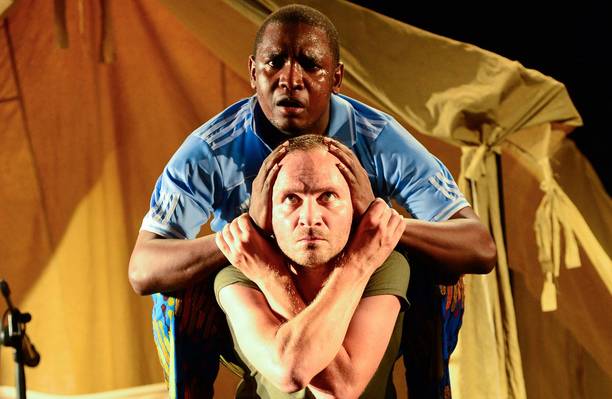
Cameroon’s capital of Yaoundé was founded by the German colonial administration in 1889 as a research station for the ivory trade. In the German-Cameroonian coproduction “Fin de Maschine / Exit. Hamlet”, the Bochum ensemble “kainkollektiv” and the...
Maji Maji Flava
Between 1905 and 1907, the Maji Maji uprising challenged the colonial administration of German-East Africa and was eventually quelled in the most brutal fashion. Since the 1960s, the uprising has become a national legend in post-colonial Tanzania...
Curvature of Events. Baroque. Romanticism. Video
Many contemporary art exhibitions in African countries are developed by German or European curators from an ethnographic perspective. The project “Curvature of Events. Baroque. Romanticism. Video” reverses this perspective. In cooperation with the...
African Futures
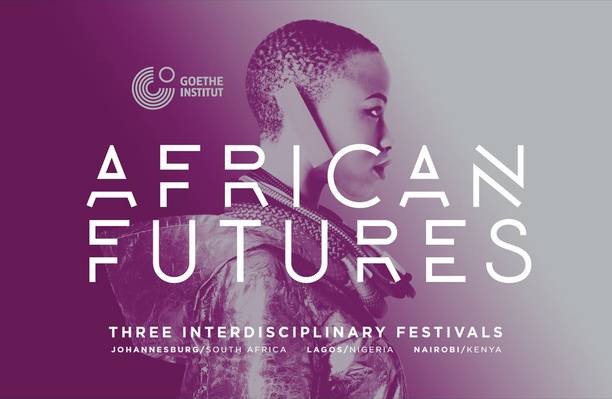
“If you want to have any idea of the world that is coming, the world ahead of us, look at Africa!”, says Cameroonian writer and intellectual Achille Mbembe. From Lagos to Nairobi to Johannesburg, the continent is giving answers to global questions of...
A Labour of Love
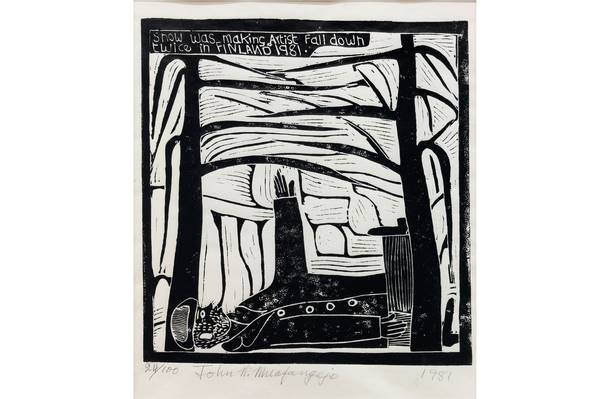
The Weltkulturen Museum in Frankfurt/Main has been collecting contemporary African art since 1974; its collection now comprises some 3,000 artworks. The exhibition “A Labour of Love” featured South African works from this collection along with...
Crumbling Through Powdery Air
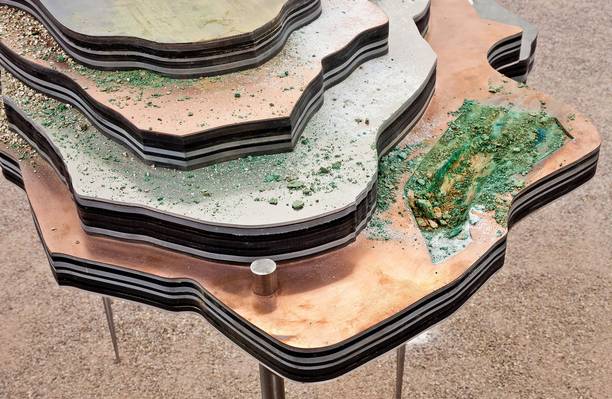
In her exhibition “Crumbling Through Powdery Air”, Otobong Nkanga (*1974 in Kano, Nigeria) probed and reflected on the multifaceted historic and contemporary phenomena related to the extraction and production of sparkling substances, and thereby...
Aller et Retour
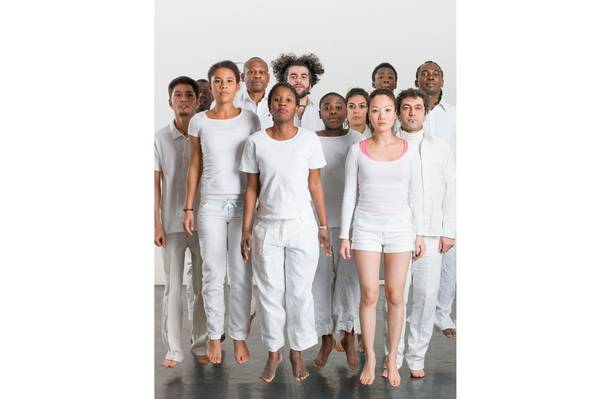
In the project “Aller et Retour”, the transnational performance group Hajusom collaborated with young performers from the Centre de Formation et Recherche en Arts Vivants (CFRAV) in Ouagadougou on a production examining the images and views of Europe...